Turning Seeds into Sustainable Success - LAMALO ESSENTIALS
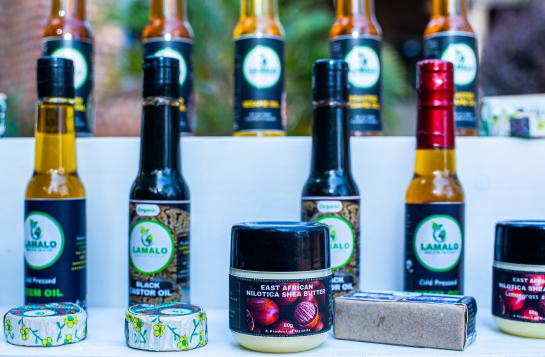
Frustrated by a market devoid of quality organic personal care products and driven by a burning desire to stop post-harvest losses in their tracks, Rita Akuwana co-founded Lamalo Essentials in 2021. Today, the Jinja-based agribusiness transforms raw nature like shea nilotica, neem, avocado, castor, sesame, and peanuts into celebrated edible oils, medicinal treatments, and handcrafted soaps trusted across Uganda.
From the ground up, Lamalo has been about community resilience. Starting in Wanyange, they built a robust network partnering with smallholder farmers across Northern Uganda for premium shea and neem seeds, and Eastern farmers for avocados, sesame, peanuts, and castor. "The problem that we solve at Lamalo is the problem of post-harvest losses," Rita explains. "We partner with farmers by sourcing their produce at an affordable price, bring them to our premises, press the oil out of them, and give them a longer shelf life."
Yet, the early chapters weren't without hurdles, Lamalo weathered foundational struggles with loose documentation, undefined operating procedures, and disorganized records that closed numerous doors on funding. Reflecting on the wider landscape, Rita highlights the steep climbing path for women entrepreneurs: crippling capital gaps, knowledge deficits, the sheer paralyzing fear of starting, the hesitation to formalize businesses, and a scarcity of vital mentors.
From Grassroots to Global Standards: How Einstein Rising and WE4A Transformed Lamalo Essentials In 2025, Lamalo Essentials stepped into a new era of growth by joining the GIZ IYBA-WE4A programme, receiving targeted incubation from the entrepreneur support organization (ESO) Einstein Rising. As Shiella Karungi, WE4A Project Lead at Einstein Rising, points out, the hurdles facing regional founders are steep: "Female entrepreneurs outside Kampala lack networking opportunities. Access to capital, legal business registration, and financial tracking are some of the biggest challenges they speak of." By bridging this gap, the WE4A programme has empowered ESOs to extend their reach beyond the capital. Today, Einstein Rising proudly backs over 320 entrepreneurs across Hoima, Bushenyi, Mbarara, Iganga, Bulambuli, Mbale, Jinja, and Northern Uganda with Lamalo Essentials shining as a prime example of agribusiness excellence.
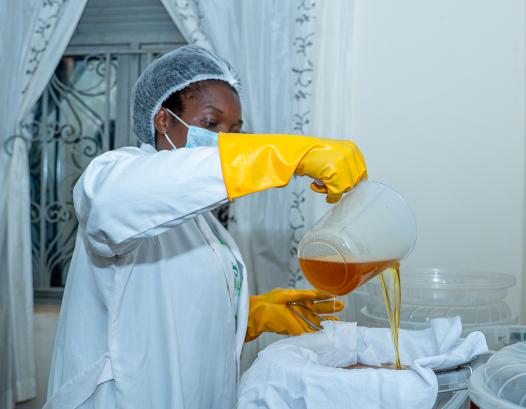
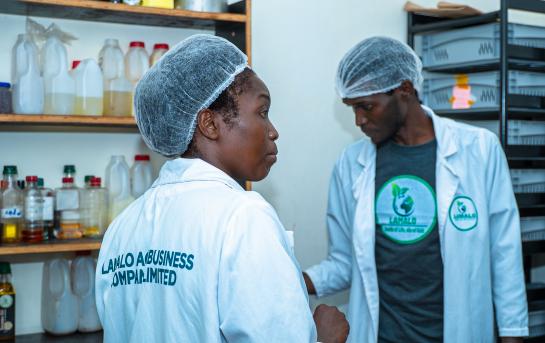
For co-founder Rita Akuwana, the transformation has been revolutionary. "We have improved our documentation and now have standard operating procedures that we follow every day, such as checking for moisture content when making oils and soaps, weighing raw materials, wearing protective gear, proper daily equipment cleaning, and tracking every step of production," she shares. Despite crafting premium, organic products, Lamalo previously faced a major ceiling: the absence of official quality certification, which locked them out of lucrative local and international markets. Stepping in to bridge that gap, Einstein Rising has taken Lamalo's production team through rigorous quality control training and hands-on mentoring. "The IYBA WE4A programme has mentored us brilliantly through the certification process," Rita reflects. "We realized we had settled into our comfort zone. But this training has a way of pushing you to break past those limits and aim higher."'
The impact is already visible in the numbers. Before IYBA WE4A, Lamalo sold about 80 pieces of its 60g handcrafted soaps each month. Today it sells over 200 a month, and in peak months more than 400. Edible oils have grown from about 50 pieces of 30ml a month to an average of 300 pieces of 100ml a month, and medicinal oils have followed the same trend, from about 50 pieces of 30ml to an average of 300 pieces of 100ml a month. Annual turnover stood at 25 million UGX before WE4A, and Lamalo is forecasting more than 40 million UGX for 2026, an increase of over 60%.
The team has grown with the business. After restructuring its processes and systems following the WE4A trainings, Lamalo has grown from 4 employees to over 14, creating more than 10 new direct jobs.
Sowing Sustainability, Reaping Impact: The Future of Lamalo Essentials Beyond crafting organic personal care products, Lamalo Essentials has fully embraced a circular economy model. What used to be discarded waste is now repurposed into high-value organic fertiliser and animal feed, closing the loop and selling right back to local farmers. But their impact goes far beyond manufacturing. Lamalo actively trains smallholder farmers on the economic potential of neem and castor seeds, while equipping local women and youth with hands-on soap-making skills. "The women and youth sell the handcrafted soap and earn money from it," Rita notes proudly. More than 200 smallholder farmers are supported through Lamalo's sourcing of raw materials, and over 30 women and youth have so far gained hands-on soap-making skills, creating opportunities for self-employment and improved livelihoods.
Reflecting on her entrepreneurial journey, Rita encourages fellow women in business: "Start small, be resilient, and be confident in exposing your work to the world. Entrepreneurship is all about being courageous. You have to open up, you have to interact, you have to network so that you can grow." Echoing this call to action, Shiella urges development partners to heavily back women in green businesses, perfectly aligning with the Uganda Green Growth Development Strategy. "It's important to support women entrepreneurs in Uganda because the majority of our population is women," Shiella emphasizes. "Once you change the mindset of a woman, whole communities are changed, leading to economic growth and poverty reduction in the long run."